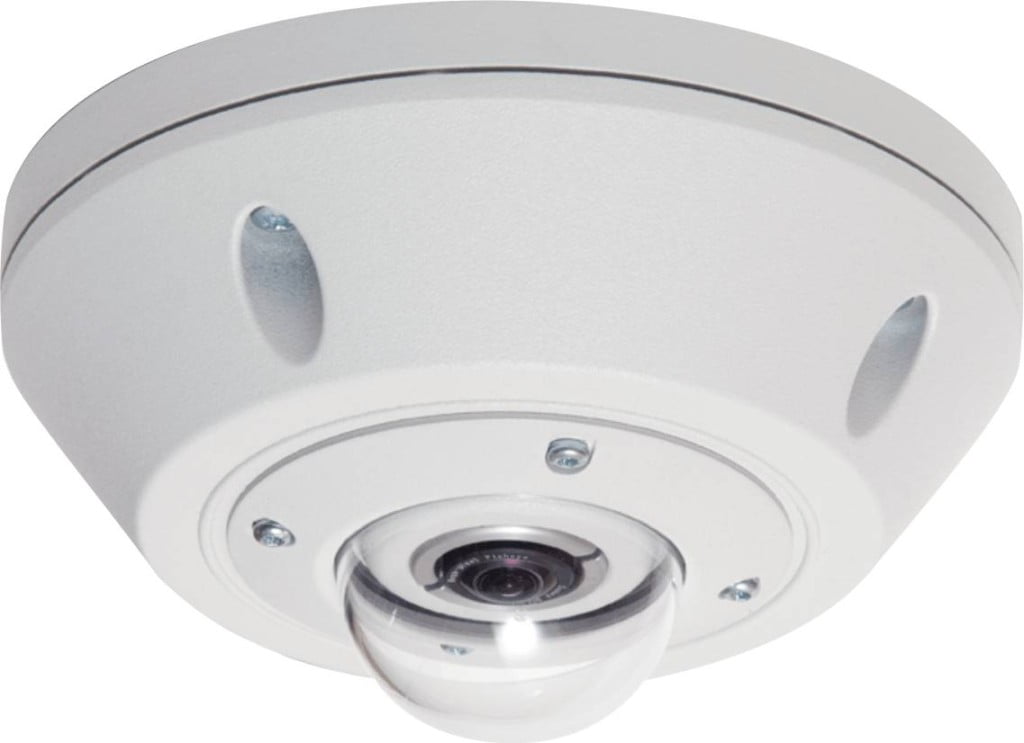

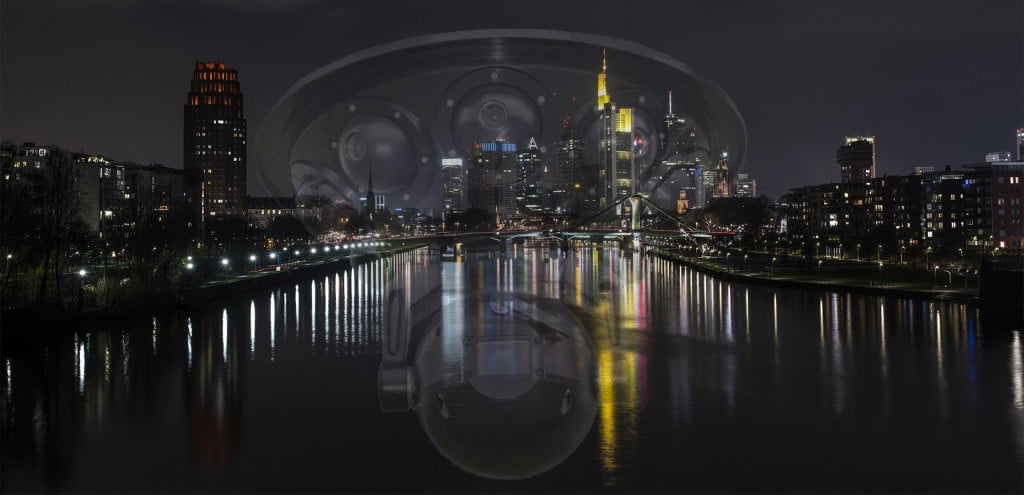

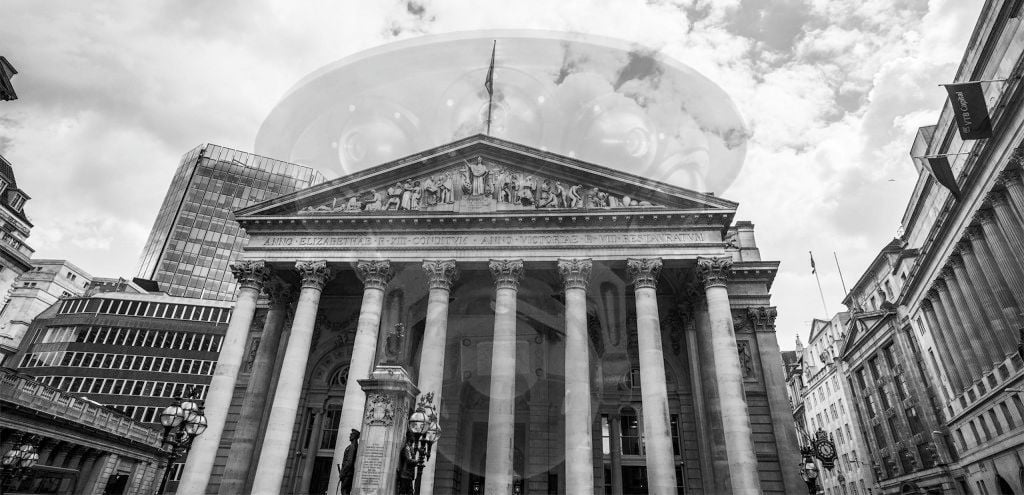
The latest surveillance technology no longer asks an operator to watch a wall of screens. Instead, the camera reads the scene itself. Viseum builds that intelligence into a single 360 degree unit, so one mast covers ground that once needed a cluster of cameras and a room full of staff.
AiRadar and the thermal and optical camera
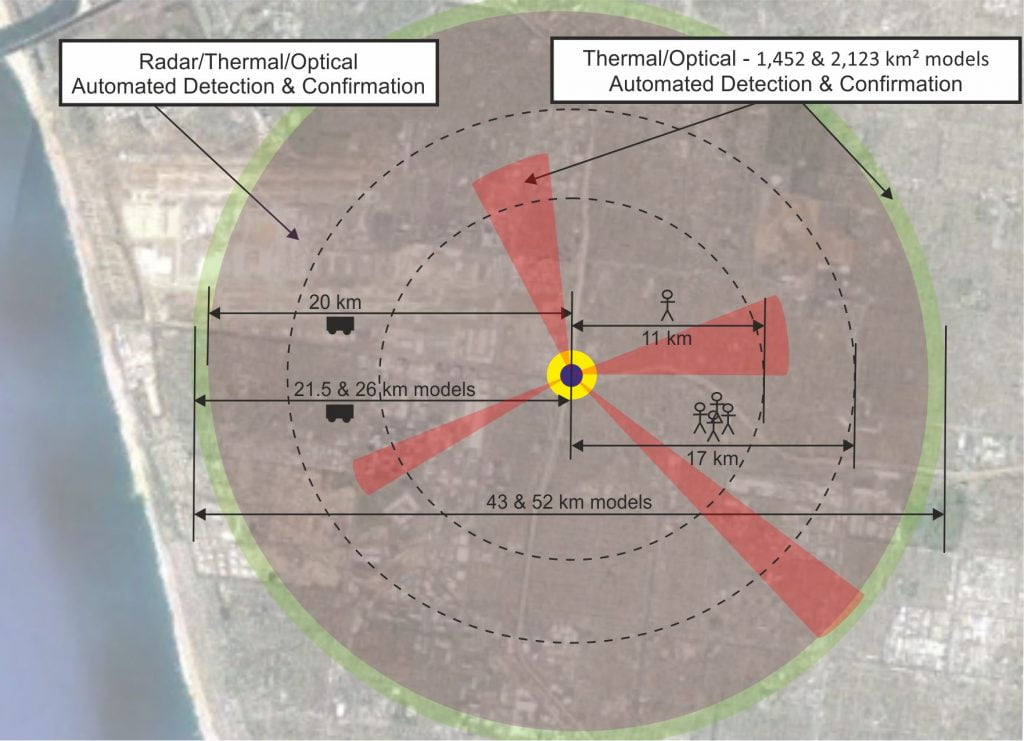
The Viseum AiRadar finds every object around a site while the thermal and optical camera turns to each one and zooms in. Each sensor has its own role, and the two always work together.
Read the step-by-step description
A coastal site. The Viseum AiRadar (gold) covers all 360 degrees all the time; the thermal and optical sensors (blue) turn to each person, group, vehicle and ship (at sea only), reach only as far as that target, and zoom in. In the corner by the road, each vehicle, the group of people and the distant convoy of three vehicles are looked at one by one, then the two vehicles together, then the group with the convoy, and finally the whole corner at once. The view on the right names a target once the sensors are halfway through zooming in.
Following one person through standard and Viseum IMC cameras
A Viseum IMC camera picks one person out of a crowd and follows them from camera to camera, beside a fixed standard camera that cannot.
See Viseum Face Recognition Software
Read the step-by-step description
Cameras 1 and 3 are standard cameras with a fixed view: each sees only what is inside its cone, narrow close to the camera and wide across the far sidewalk. Cameras 2 and 4 are Viseum IMC cameras: each sees all round, and zooms in on one person at a time, the narrowed view drawn on the street, following them until a usable face is captured. Everyone who walks into a camera's view is boxed in the street view, appears in that camera's view below, and is profiled straight away in the panel on the right, so the three always agree; when several people are in view the panel cycles through them. Find: camera 1 picks the suspect in the red jacket out of the crowd and builds a profile of clothing, height, build, hair, bag and walk. Between cameras the suspect is out of sight and the profile is held. Faces are captured whenever a camera sees one and are shown as a face-recognition system sees them, not as pictures: 68 landmark points on a face mesh, how far the head is turned, and a quality score. A side view, eyes under a cap or a head looking down is too poor to compare; only a full face is turned into a template and compared with the authorised watch-list, and anyone below the alert level is a no-match whose template is deleted at once, as in UK police live facial recognition. Fix: Viseum IMC camera 2 zooms in on selected people in turn; the suspect's full face scores above the alert level and matches the profile, so the suspect is confirmed, while every other face is a no-match and is deleted. A zoom cannot see eyes under a cap, so that face stays too poor to compare. Standard camera 3 sees only a turned face and re-identifies the suspect by profile. Viseum IMC camera 4 zooms in on the suspect only, to reconfirm the re-tracking by face. Follow: the profile is handed on from camera to camera. The alert level of 0.60 is the default setting of a leading police face-matching system (National Physical Laboratory, 2023); the other scores shown are examples.
Latest surveillance technology for governments
Governments and their technology advisors need to know what has actually changed.
Independent proof

(Metropolitan Police Report)
One Viseum camera does the work of 6 constantly manned cameras, a Metropolitan Police surveillance officer reported. Read the report (PDF)
The latest surveillance technology news from Viseum
The latest Surveillance Technology news for advanced, field-proven know-how, methods and concepts. Our most up-to-date camera technology innovation for fully automated security and surveillance success. Viseum’s Video Analytics Software Technology Services and Design innovations represent the world’s most advanced and future-proof security technologies: deep learning trained on real street scenes, designed to be upgraded in service.
Fully automated video surveillance technologies and security. Deep-learning neural networks using Viseum AI Software Technology Services. Our Video Analytics Software is known as Viseum iVOS (Intelligent Virtual Operator Software).
Deep learning that cuts false alarms
Older analytics fired on shadows, headlights and rain. Operators switched the alerts off. The latest surveillance technology uses deep learning networks trained on real street scenes, so the system separates a genuine incident from harmless movement. The alarms a control room receives are worth acting on.
One camera that behaves like a team of operators
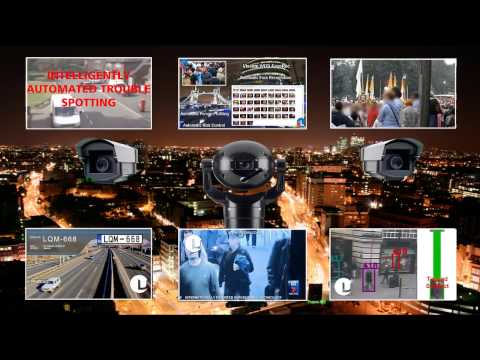
Viseum iVOS Software Technology Services drive a moving PTZ camera from the evidence that the surrounding fixed cameras collect. In practice, the unit detects an incident anywhere in 360 degrees, zooms straight to it, and records a close-up while the wide view keeps watching everything else. A single position delivers both context and detail.
- Automatic detection of loitering, fighting, drug dealing and abandoned objects.
- Close-up evidence captured before the alarm reaches a human.
- Open standards, so the camera joins the Video Management System you already own.
- Upgrades to legacy PTZ cameras, which protects earlier investment.
- British design, manufacture and engineering support.
What the latest surveillance technology costs to run
Capital cost is only part of the procurement case. A government has to fund the operators, the network and the maintenance for a decade. Because our cameras raise an alarm on their own, a small team supervises a large district. Our engineers help advisors model the whole-life cost before a tender goes out. This mirrors wider thinking on deep learning in operational systems.

 Viseum introduced Video Analytics Software to the world in the year 2000. Our international technology record is a testament to our development and support of video analytics software for longer than any other organisation in the world.
Learn More »
 Viseum advanced surveillance technology finds, fixes and follows suspects across a city or a country. Designed by Viseum, made in Great Britain.
Learn More »
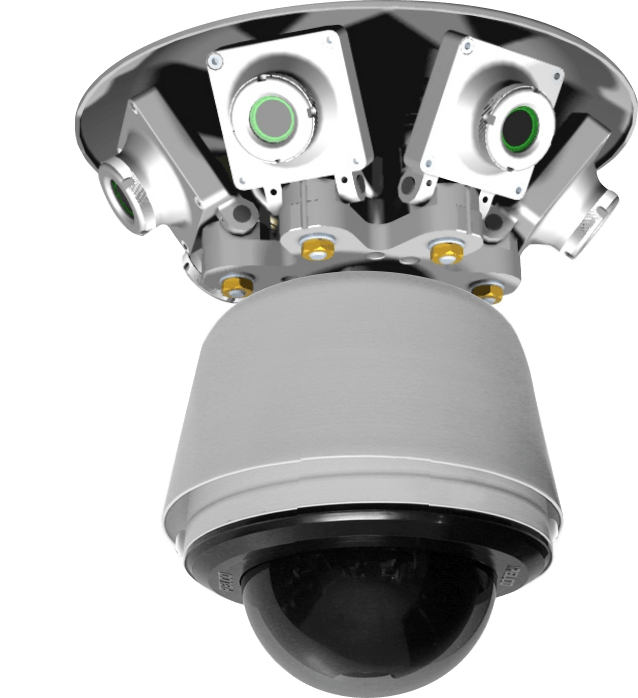 Viseum UK Intelligent Systems is known for its security Intelligent Video Management System. The company specialises in solving the problem of wide-area surveillance.
Learn More »
Explore Viseum
Intelligent Moving Camera PSIM
Our services and record
- Surveillance Video Quality
- Outdoor Security Camera
- Surveillance Training
- Surveillance British Standards and accreditation
- Security and Surveillance Technology Strengths
- Surveillance Support Services
- Surveillance Design
- Security Project Management and Delivery
- Continuous Improvement Programme
- Security and Surveillance Strategy
- Control Room Software
- Video Security Consultancy
Latest Security News
What happens after you contact Viseum
A specialist reads your project questionnaire for a commercial review and checks it against projects we have already delivered.
We arrange a live demonstration, either online from your own desk or on your site with a Rapid Deployment trailer.