

Border Control and Border Security
Viseum iVOS F3 (Find, Fix, and Follow) Software Technology Services. Tracking where people have been, where they are and where they are going. Early prototypes were known as Tag and Track. The technology also supersedes video SmartSearch.

Protecting a whole border
Towers, patrols and command control protect a whole border, one track per object, from the first detection to the patrol's response.
Read the step-by-step description
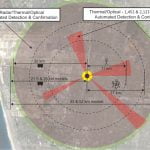
Viseum AiRadar and camera towers, no wall: one sector in detail and the whole border below it, in the proportions of published border systems. Each tower's AiRadar is a slow gold pulse inside its gold coverage ring (360 degrees, as on standard twin-head border towers). People, groups of people, vehicles and convoys approach from both sides in turn, and each is shown before the AiRadar picks it up: a white dot, a group of dots, a white oblong or a line of oblongs. Every tower whose AiRadar reaches it follows it with its thermal and optical camera, and a description box zooms out for a moment, to a part of the picture where nothing is happening, showing what the cameras see: a person, a group of people, a vehicle, a convoy of vehicles, or a false alarm such as an animal. The local command control lights up and sends the nearest patrol to the point where the line would be reached, and the early warning gives the patrol time to intercept them before they reach the line; anyone coming in turns back. Each object is one track with its own number on the live map, handed from tower to tower so every tower that reaches it follows the same track, and the patrol sent to it sees the live view and its route on a handheld while its own position shows at the local command control. The classified event goes up to the central command control, in the middle of the whole-border panel, which can call up the live video on demand. When the events in sector 3 are over, the whole view slides along the border to sector 7, and the bracket on the whole-border panel travels with it. Sector 7 is laid out differently: the border follows a river, with a road and bridge to a crossing point, the towers stand in two staggered rows, there is forest on this side of the river, and its local command control sits at the side. Objects approach from both sides again and are found, classified and stopped in the same way; then the view slides back to sector 3. Beside the central command control sits a backup command control on hot standby at a separate site; every local command control is linked to both (the dashed lines), so the backup can take over at once if the central one is lost.
Finding tunnels under a border
One fibre-optic cable hears digging, a responder team confirms it on the ground, and the tunnel is sealed.
Read the step-by-step description
A slice through the ground across the border, with a plan view on the right: one fibre-optic cable is buried alongside the border for its whole length and locates any vibration along it to within about ten metres. The bar along the top shows the stage and how much real time has passed: nights for the listening, days for the response and months for the sealing. Find: a tunnel is dug from a building on the far side, out of sight of anything on the surface: one tunneller digs at the face while another carries the spoil in a sack back along the tunnel, up the shaft and out of the building, tipping it on a growing heap, and the fibre hears the digging in one short stretch. Fix: on the fibre's display walkers and vehicles draw sloping lines as they pass along it, while the digging returns to the same short stretch night after night, growing as the tunnel advances: that persistence marks a tunnel. Follow: a responder team drives to that point, and the view slows and zooms in while it works. It pushes three small listening sensors into the ground over the alarm, each feeling vibration directly beneath it; the digging reaches each sensor a moment apart, and those differences show where the digging is below. A mobile radar wheeled over the ground then looks for the gap the tunnel makes, and where the two agree the line of the tunnel is marked; a test drill on that line breaks into it, and a camera lowered down the hole proves it. Stop: a concrete mixer truck pumps concrete down the drill hole, filling the hole and the tunnel on this side up to the border line; its start is reported to the neighbouring country, the evidence goes to investigators, and the fibre keeps listening in case it is used again. This is how buried fibre is used on national borders: one cable along the whole line, with responders confirming every alarm on the ground, because the fibre tells where along the line the digging is but not how deep it is.
- Let legitimate people and vehicles cross your borders without delay, and stop everyone who is not authorised.
- Identify suspects who have passed all other standard border security checks.
- Control your borders, helping your nation to be the safest it can be.
Some of our unique technology strengths for border control are to automatically identify and follow people using different visual biometrics, and cross-reference this information to their actions, locations and access control information.
Global F3 and Social Media Investigation Cross-Checks
Download Border Control and Border Security Global F3 Video
You can download these videos and presentations from the Partner Resource Library of our website in various formats for your device and operating system.

 Viseum’s multitasking camera automates security and revenue-generating traffic management. This was a Safe City Camera training day using our Face Recognition Software Technology Services and Social Media Investigations.
Learn More »
 Viseum F3 (Find, Fix, and Follow) Software Technology Services, a world first, finds a person, fixes their identity and follows them.
Learn More »
Border Control and Border Security Counter-Terror Training
Viseum’s counter-terror Border Control and Border Security training in London was based on the operation in the Global F3 video. This programme remains a current focus of Viseum’s training work. Our certified partners are working through procurement with governments across all continents.
 Viseum introduced Video Analytics Software to the world in the year 2000. Our international technology record is a testament to our development and support of video analytics software for longer than any other organisation in the world.
Learn More »
The success of Viseum Border Control and Border Security draws on all the strengths of the Viseum Surveillance Technologies. The work relies on Viseum design innovation in video analytics software, watchlist management and the optimisation of processing across servers, virtual servers and super servers. Each database integration is designed for the country concerned, so that situational awareness is as close to real time as possible.
Security professionals recognise Viseum as a breakthrough in security, surveillance and video analytics software capability. With much already invested in sub-optimal legacy systems, potential customers will fear that there is no realistic way to completely upgrade to an all-Viseum intelligent camera and video management system. However, Viseum Software Technology Services are hardware-independent. Viseum iVOS and CiVMS Software Technology Services and Viseum Cameras are retro-compatible with legacy systems and any other camera. When Viseum Software Technology Services are commissioned, security professionals are assured their legacy camera installations are also future-proofed. With our intelligent analytics, their video wall will spring to life for the very first time.
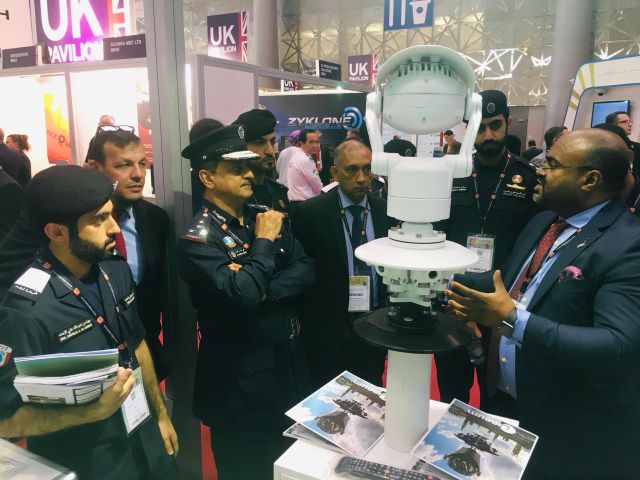 The Viseum AI surveillance technology introduction is a phased programme that trains and equips your team while the system is deployed.
Learn More »
Border Control: Technology Introduction Programme
Creating a country’s Border Control and Border Security with Viseum Social Media Investigations is a long-term objective. Our customer’s long-term goal is to become fully trained and equipped to use all levels of Viseum technology. This delivers the highest levels of security services.
Viseum’s Technology Introduction Programme integrates and deploys the many systems and technologies in this product. This usually takes one year to reach LEVEL 5.
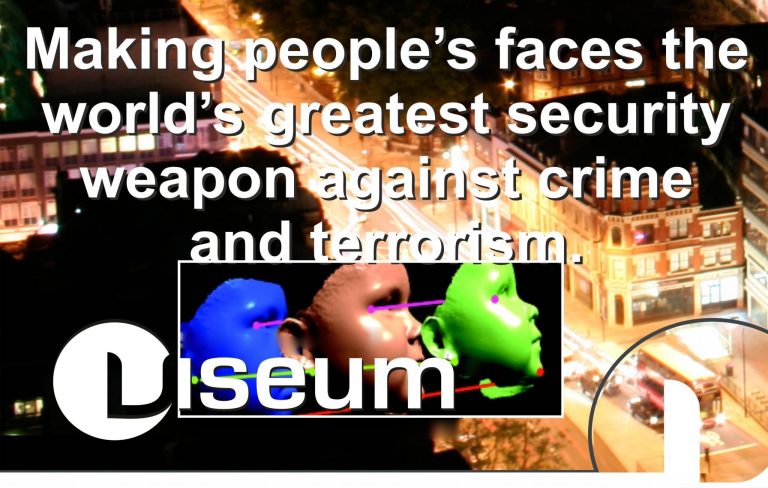 Viseum face recognition software optimises any network of cameras: it automatically detects and recognises faces from short range to long range.
Learn More »
During border crossings, it is common for legitimate travellers to fail face recognition but pass interviews with border security personnel. Viseum Face Recognition is built into Viseum F3, which follows each traveller until a usable face is captured. To reduce reliance on post-event analysis and to limit security risk, face recognition software should be selected on technical performance and reliability.
More in Intelligent Video Analytics
 Under Vehicle Surveillance System (UVSS)
 Vehicle Cross-Check
 AI Video Analytics
 Border Control and Border Security
 Face Recognition Software
- F3: Find, Fix and Follow
 Face Recognition Analytics
 Traffic management software
 Video Management System (VMS)
 Advanced Surveillance Technology
- See everything in Intelligent Video Analytics
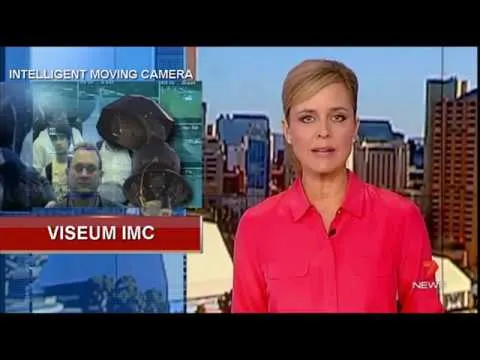
Viseum AI camera on TV
Latest Security News
What happens after you contact Viseum
A specialist reads your project questionnaire for a commercial review and checks it against projects we have already delivered.
We arrange a live demonstration, either online from your own desk or on your site with a Rapid Deployment trailer.