

AI Situational Awareness endorsed by international law enforcement agencies
One Viseum camera does the work of 6 constantly manned cameras, a Metropolitan Police surveillance officer reported. These results were achieved by deploying Viseum cameras in some of the UK’s highest crime areas, demonstrating the status of the Viseum Intelligent Panoramic Security Camera as the ultimate versatile PTZ Camera. See the 360 Security Camera.

Following one person through standard and Viseum IMC cameras
A Viseum IMC camera picks one person out of a crowd and follows them from camera to camera, beside a fixed standard camera that cannot.
See Viseum Face Recognition Software
Read the step-by-step description
Cameras 1 and 3 are standard cameras with a fixed view: each sees only what is inside its cone, narrow close to the camera and wide across the far sidewalk. Cameras 2 and 4 are Viseum IMC cameras: each sees all round, and zooms in on one person at a time, the narrowed view drawn on the street, following them until a usable face is captured. Everyone who walks into a camera's view is boxed in the street view, appears in that camera's view below, and is profiled straight away in the panel on the right, so the three always agree; when several people are in view the panel cycles through them. Find: camera 1 picks the suspect in the red jacket out of the crowd and builds a profile of clothing, height, build, hair, bag and walk. Between cameras the suspect is out of sight and the profile is held. Faces are captured whenever a camera sees one and are shown as a face-recognition system sees them, not as pictures: 68 landmark points on a face mesh, how far the head is turned, and a quality score. A side view, eyes under a cap or a head looking down is too poor to compare; only a full face is turned into a template and compared with the authorised watch-list, and anyone below the alert level is a no-match whose template is deleted at once, as in UK police live facial recognition. Fix: Viseum IMC camera 2 zooms in on selected people in turn; the suspect's full face scores above the alert level and matches the profile, so the suspect is confirmed, while every other face is a no-match and is deleted. A zoom cannot see eyes under a cap, so that face stays too poor to compare. Standard camera 3 sees only a turned face and re-identifies the suspect by profile. Viseum IMC camera 4 zooms in on the suspect only, to reconfirm the re-tracking by face. Follow: the profile is handed on from camera to camera. The alert level of 0.60 is the default setting of a leading police face-matching system (National Physical Laboratory, 2023); the other scores shown are examples.
Global F3 Find, Fix and Follow
One suspect, from a plate read in a city to detention at a border. Each step is found, fixed and followed, and a person confirms before anyone acts.
See Viseum Global F3 Find, Fix and Follow
Read the step-by-step description
A suspect vehicle drives into City A, watched by Viseum 360-degree and fixed cameras, among ordinary traffic. The bar along the top shows the stage: find, fix, follow. The strip along the bottom names where we are (for example City A, Station, Main Street), with the camera or source that has the person and the time; once the view moves in, the inset in the top corner shows the whole city with a gold rectangle for the part in view. Four moments slow down and zoom in: the face captured through the windscreen while the car is held in queuing traffic at a junction, and identified against the watch-list as wanted; the operator confirming the match from the line of look-alikes; the person lost inside a building, every exit watched, and, after changing clothes inside, re-identified on the way out: a card shows the watch-list profile (red jacket) beside what camera 14 sees (grey jacket), and ticks face, build and height, the backpack and the phone data in turn, marks the jacket as changed, and updates the profile; and the switch to a new car, when a drone takes over. Find: the number plate is read on the move; it belongs to a white Nissan Patrol but the car is a black Toyota Camry, so the car is flagged. The crosscheck appears over the bottom right, so the map stays clear. Fix: on foot among people who look alike, the cameras turn to each look-alike in turn and score it as they look (violet circles); the closest scores are listed, and one best match goes to the operator, who confirms it. Follow: each camera hands over to the next with a gold token. Police are told at once, but in a crowded city they follow at a distance and wait for a safe place to stop the suspect, so the cameras keep the suspect in sight for them; the second half shows where that happens. When line of sight is lost, dashed routes run to the cameras the person could reach next; the route to the camera where they reappear turns solid and the others fade. Cameras cannot see through high-rise blocks, only along streets and across open spaces. Each source is shown on the map where its information comes from, and its place on the Global F3 ring lights as it reports: a public post placing them in the area, a database record of past events on this route, a shop's own camera, shared live with the city network under a registered partner programme (as Dubai's Oyoon programme links private-sector cameras) and matched by the suspect's profile, the phone mast whose network data, where lawfully provided, places them inside the building, the vehicle crosscheck of the new car, and the drone. On the right, each source lights as it reports, the match level rises and falls with what is known, the newest finding sits at the top and command control shows which alerts went out. At the end the whole route is drawn in gold and the car, with the drone above it, leaves City A at the edge of the map. The match levels and scores shown are examples. Command control shows how each alert is used: the operator's alarm and the video wall in the control room, the patrol's handheld app (live view, photo and route) and the police radio for the officers on the ground, and the case file, which keeps every image and finding as evidence.
The suspect then drives away. In a slow moment at the city limit, the drone, which flies over City A only, hands the car to the first highway camera with the usual three beats (the drone glows, a gold token passes, the camera glows) and turns back. The same city then pulls out into its place on a simplified map of a real coastline and border, with no real names. Between the highway's cameras the car is unseen, so Global F3 weighs four possibilities, each drawn as a dashed blue route: the car hides in City A, or it heads for City B, the airport or the border crossing. City A's control room watches its parking areas and garages for the hiding case, and the profile, face and plate are sent ahead to the other three. Each possibility is then settled in turn: the plate read at City B rules out hiding in City A; the airport sighting confirms that route; no sighting back in City B rules City B out; and the border crossing is where the suspect is detained. The bars on the right show where the suspect could be, and the clocks show the journey time and the time since they were last seen. Each re-identification is a slow moment: the view slows down and zooms in. On the coastal highway at the edge of City B, a number-plate camera reads the car's plate in moving traffic (the plate is shown masked); staying in City A falls away and the route to City B turns solid. City A's control room then hands the case to City B's: the first glows, a green token travels between them along a green dotted control room link, the second glows, and the label in the corner of the map changes to the control room now in charge. At the airport entrance, where the airport runs live watch-list matching as Gulf airports do, the suspect is re-identified by face and profile against the authorised watch-list and an operator confirms, and police are sent from inside the terminal, but before they reach the entrance the suspect is back in the car and drives away, still followed by the cameras. With no sighting back in City B, the possible routes narrow to the inland road and the case is handed to the border control room. At the checkpoint the face and the plate are matched against the watch-list, an officer confirms, the lane barrier stays closed, and two officers detain the suspect at the booth and lead him away. He never crosses. Because he was heading for the neighbouring country, its police are then told through INTERPOL, in case accomplices or others are waiting for him on their side; nothing is tracked there. Finally the whole journey is drawn, solid gold where a camera saw the suspect and gold dots where it was worked out, with each hand-off marked by a gold diamond, and the panel sums up the sightings, hand-offs and elapsed time. Throughout, the overview in the corner shows where each close-up sits, and the strip along the top names the place. What each source on the Global F3 dial adds: Vehicles reads every plate and finds that this one belongs to another car; Face confirms the person, and an operator checks every match; Social media, checked under lawful authority, places the person on a street from a public post; Knowledge databases (police records) show the route was used before, so the system predicts where they go next; Partner cameras, a shop’s own cameras shared with the police, keep the follow going; Mobile networks, where lawfully provided, confirm the person is inside a building; and Drones follow from above when the person drives away. The match scores, plate digits and journey times shown are examples.

This narrated presentation shows what the Viseum IMC Panoramic Camera is, how AI situational awareness works and how other Viseum Product Solutions can deliver security using this 360° Security Camera.
In making its endorsement, the Metropolitan Police said, “The Viseum camera moving automatically is one of its key advantages in crime-fighting and this allows these cameras to be in constant use.” The Met Police also praised the availability and receptiveness of Viseum’s customer support. It concluded that it would use Viseum whenever it required video surveillance.
International law enforcement successes with the Viseum PTZ Camera
The Metropolitan Police used Viseum cameras on a series of operations. One camera, in place for 3 weeks, gathered the evidence that led to the arrest and conviction of a gang dealing drugs and organising fights. The gang has not been seen in the area since. Three redeployable Viseum cameras, set up for a month outside a public common with no lamp-post power, covered every route in and out. They led to the arrest and charge of a man for multiple sexual assaults. Viseum evidence also identified a vehicle used by a gang stealing motorcycles.
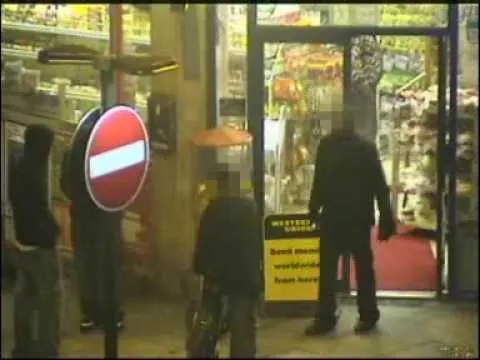
Two cameras, in place for a month in a surveillance black spot, led to the arrest of the ‘Slit Throat Robber’ after a victim identified him from Viseum’s video. At a food and off-licence store targeted by several suspects, the first camera noticed a suspect walking a circuit of the area and followed him automatically while it was still being installed.
Read each operation in the surveillance officer’s own words.
Metropolitan Police endorsement
A Metropolitan Police surveillance officer reported that just 4 Viseum cameras did a better job than at least 20 of any other type of advanced PTZ camera. Viseum’s multipurpose PTZ Cameras have now won the approval of international law enforcement agencies.
AI Situational Awareness Solutions
There is a wide range of potential applications and environments for cameras. More organisations are looking for AI situational awareness solutions that can provide security everywhere at the same time, providing the ultimate long-term crime deterrent and automatically producing video surveillance evidence. Many also need a solution that keeps running costs down under constant budget pressure. The solution for these needs is designed and produced by only one organisation: Viseum UK.
Viseum UK’s success rests on two things: its intelligent monitoring Video Content Analysis (VCA) Software Technology Services and its unique video surveillance PTZ Camera designs. This combination makes the company attractive to buyers who need high security. Restricted budgets help Viseum, because they make buyers more demanding. They want systems that deliver both value and results. Fewer security cameras that work make more sense than many cameras that do not.
“Success is not about more AI surveillance cameras. Viseum UK built its success on intelligent video content analysis (VCA) software and video surveillance innovation,” said Stuart Thompson, President of the Viseum UK Group and CEO of Viseum International Limited. Viseum builds intelligence into every camera, so each installation finds and records more on its own. Adding cameras to systems that do not work wastes money. Viseum built its business on fixing that. The recession removed suppliers who could not prove results. Viseum, with evidence of real results, prospered.
The success of Viseum cameras was praised by the Metropolitan Police. Also, this shows the potential value of the Viseum camera in a range of settings. Of particular appeal to businesses is the camera’s mobility as demonstrated by the Metropolitan Police. This means that less money and fewer staff are required to operate it, compared to all other competing camera systems. This is a great help to businesses given the pressure of restricted budgets.
The Viseum Intelligent PTZ Camera simplifies permanent and temporary deployment options. It is designed for populated open space or for non-populated multiple or single attack intruder environments. Each Viseum Intelligent Moving Camera (IMC) consists of the Intelligent Panoramic Security Camera and an advanced DVR camera controller. The Viseum IMC can be configured and purchased for targeted or full panorama coverage, and can protect any open space, from a close proximity area the size of a small garden, up to a large open space the size of 4 Olympic Stadiums, in all directions and at the same time. Extreme long-range camera solutions are also available which make use of thermal and radar technologies.
Stuart Thompson of Viseum said, “Viseum PTZ Cameras have delivered strong performance in situations where there is a need for video surveillance. A Metropolitan Police surveillance officer has reported on the results of Viseum’s multipurpose PTZ Cameras. Police forces can estimate their own savings with our police surveillance savings calculator. Combined with our high standard of technical support, the Viseum Intelligent PTZ Camera is the complete AI surveillance solution.”
This is the latest high-profile endorsement for the Viseum Intelligent PTZ Camera. It further demonstrates its ability to respond to a range of security and surveillance needs, making it a serious consideration for anyone. Read more about Viseum police surveillance cameras.
More in Technology
- Fewer Cameras, Fewer Police, More Arrests with AI Situational Awareness

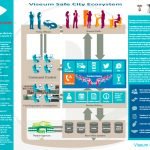
 Safe City Ecosystem
 Government Ethical AI
 AI Social Media Investigations Software
 Border Control and Border Security
 Surveillance Video Quality
 Ethical AI video surveillance and data privacy
 Intelligent surveillance camera
 Homegrown Homeland Security Threat
 Advanced Surveillance Technology
 AI Security Cameras
 AI Surveillance Software for Situational Awareness
 IP Surveillance Camera Systems
- See everything in Technology
Drug Deal Auto Surveillance 2006
More videos
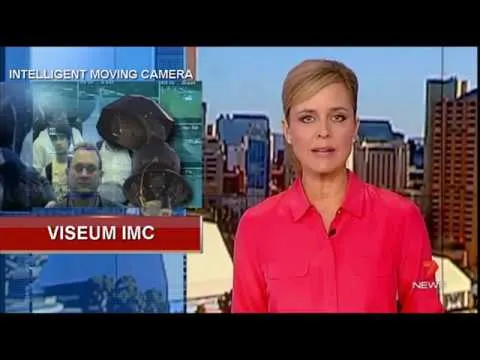 Viseum AI camera on TV
 Surveillance Video Quality
Latest Security News
For further information, visit www.viseum.co.uk
What happens after you contact Viseum
A specialist reads your project questionnaire for a commercial review and checks it against projects we have already delivered.
We arrange a live demonstration, either online from your own desk or on your site with a Rapid Deployment trailer.