 Viseum AI Surveillance Video Monitoring Software
Viseum UK’s Safe City Security Initiative
Viseum’s safe city report shows how one camera that sees every direction at once changes the security of a city. It describes a security industry shake-up, and terrorism that could have been avoided. Read the Indian perspective on safe cities.

One control room for a whole country
An operator works an alert through a guided procedure. Control rooms, city masters and a national centre then link up, with a hot backup at every level.
See Viseum Video Management System
Read the step-by-step description
The view opens on one control room's video wall: nine screens, each a different live alarm scene from the diagrams above (an object found by the Viseum AiRadar, a face confirmed in the camera network, the suspect's car handed from city to city, a person re-identified in the city, a crossing attempt stopped at the border, a drone over a protected site, the plate mismatch sent to the UVSS, the wanted passenger matched in the check bay, and the watch-list alert at the border), with the alerts list beside it. Any screen with an alert is lit in gold, and each alert opens an incident with a guided procedure that the operator follows step by step: the alert is raised and prioritised, an operator accepts it, the right cameras and the map are brought up, the operator verifies it (a false alarm is closed and logged here), a responder is sent with the live view, it is escalated if needed, and it is resolved and logged for review. The view then pulls back: the wall shrinks into its control room on the map, and every other control room in the country comes into view, each drawn as a small, sharp copy of a wall. The network is drawn as a tiered design. Each of three cities has a city master command centre and a backup master on hot standby in a separate area, and its district control rooms report to the master (dashed blue lines are the backup links). Along the land border, the sector controls report to a border master, which also has a backup. Only the masters report to the national command centre, which has its own backup, and they send up only high-risk alarms. Information pulses along the links, each room reporting at its own moment, while people are followed from city to city and each control room they reach lights up in gold. The view then moves into the national command centre, whose wall shows only a few high-risk alarms live, with a status light for every site beneath, and calls up more video on demand (no centre streams every room at once); into one of those screens, which is the first control room's wall; and on into one remote site's live view, before zooming back out to the wall, and the whole sequence runs again without a break. Every zoom takes the same time with the same easing, and every view is held for the same time between zooms.
Protecting a whole border
Towers, patrols and command control protect a whole border, one track per object, from the first detection to the patrol's response.
Read the step-by-step description
Viseum AiRadar and camera towers, no wall: one sector in detail and the whole border below it, in the proportions of published border systems. Each tower's AiRadar is a slow gold pulse inside its gold coverage ring (360 degrees, as on standard twin-head border towers). People, groups of people, vehicles and convoys approach from both sides in turn, and each is shown before the AiRadar picks it up: a white dot, a group of dots, a white oblong or a line of oblongs. Every tower whose AiRadar reaches it follows it with its thermal and optical camera, and a description box zooms out for a moment, to a part of the picture where nothing is happening, showing what the cameras see: a person, a group of people, a vehicle, a convoy of vehicles, or a false alarm such as an animal. The local command control lights up and sends the nearest patrol to the point where the line would be reached, and the early warning gives the patrol time to intercept them before they reach the line; anyone coming in turns back. Each object is one track with its own number on the live map, handed from tower to tower so every tower that reaches it follows the same track, and the patrol sent to it sees the live view and its route on a handheld while its own position shows at the local command control. The classified event goes up to the central command control, in the middle of the whole-border panel, which can call up the live video on demand. When the events in sector 3 are over, the whole view slides along the border to sector 7, and the bracket on the whole-border panel travels with it. Sector 7 is laid out differently: the border follows a river, with a road and bridge to a crossing point, the towers stand in two staggered rows, there is forest on this side of the river, and its local command control sits at the side. Objects approach from both sides again and are found, classified and stopped in the same way; then the view slides back to sector 3. Beside the central command control sits a backup command control on hot standby at a separate site; every local command control is linked to both (the dashed lines), so the backup can take over at once if the central one is lost.
Viseum UK leads a Safe Cities Report. The report reflects today’s security climate. Viseum issued it a short time after announcing its lead in the International Smart City Initiative. The world must now prepare for national security risks that most of us assume “would not happen to us”. Recent terrorism in the global news has changed this. Governments now accept that “this could happen to any of us, anywhere and at any time”.

This change in government planning for Public Safety is what Viseum UK has prepared for since 2000. Put simply, its founder knew that procuring the cheapest video surveillance cameras and installing them in as many places as possible simply did not work. This strategy made things worse. It has proved to be severely flawed. Too many standard video surveillance cameras need too many skilled people to watch and use them. Too many criminals already know this and disregard them. Viseum UK’s business mission set out to make us all aware of these undeniable facts:
- Security has not been a priority for the world’s Public Safety city infrastructure projects. The budget for security is rarely planned. The main contractor is then left to install the cheapest security products.
- Budget limits shape what gets bought. Most surveillance cameras in use around the world are of poor quality. They are built to inadequate standards.
Viseum UK is known for introducing Disruptive Technology. Its surveillance cameras and Software Technology Services disrupt and deter criminals. They are also changing how the security industry develops commercially. Buying cultures vary from region to region. Until now, brand names and vendor relationships often mattered more than performance. The actual reliability of a security solution came second. Demonstrations of Viseum solutions show customers how much ground a single camera covers, and where their present arrangements leave gaps. This message, central to Viseum’s Safe City Concept, reaches Viseum UK customers worldwide. It travels through a growing network of trusted government security advisers. Where appropriate, UK Government representatives support this work.
The report shows the results of the International Safe City Initiative. It has started to reduce financial losses from crime and disorder. It has also cut security operating costs. It has begun to prevent incidents with catastrophic consequences.
The Viseum Safe City Report
Viseum produces a safe city report that reveals how unsafe we are.
Download the Viseum Safe City Report (PDF)
Stuart Thompson, President of the Viseum UK Group and CEO of Viseum International Limited, says, “Tell us about any support our partners need in any country. Tell us about any suggestion they have, and we will take this forward with UK Government support.”
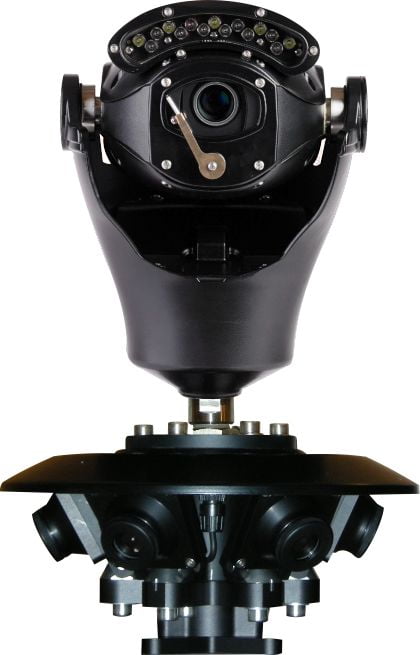
 Today, the biggest risk we all face is crime and terrorism. Viseum cameras find, fix and follow incidents in the crowded places where they strike.
Learn More »
 Places where many people gather are targets for crime, disorder and attacks on crowded places.
Learn More »

Viseum UK manages a growing number of Safe City projects worldwide. These countries have already judged their security risks to be unacceptably high. Central to this is Viseum Red Team Services. These services identify ways in which a country’s security defences could be penetrated. Hand-in-hand with this are the Viseum Blue Team Services. These put the appropriate countermeasures in place for each customer’s security and surveillance design.
Britain’s Largest Police Force said, “In today’s regime of restricted budgets, the ability to manage a city’s crime trends, and undertake its continuous monitoring without the cost of continuous staffing, is extremely attractive.”
 The Safe City concept gives a government one plan for protecting its people, its roads and its critical assets.
Learn More »
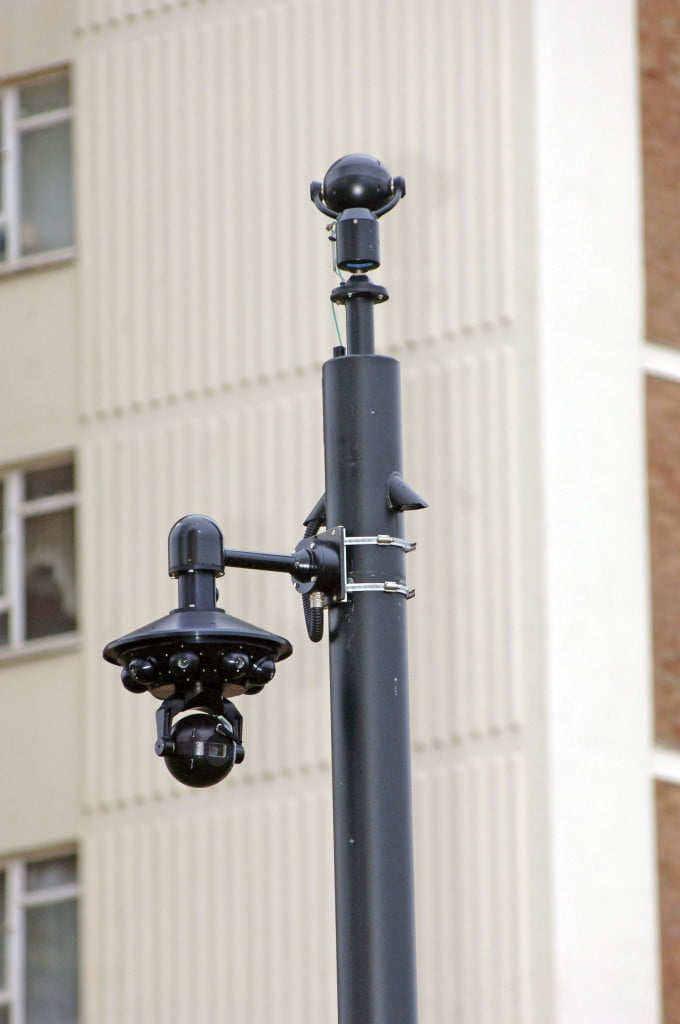 Every surveillance camera installation we deliver follows one internationally regulated process. First, we survey the site and agree measurable security goals.
Learn More »
Download Viseum Safe City Concept (PDF)
Safe City Reference Material
More in Company Security News
- International Safe Cities
 AI Surveillance Camera in the UAE
 Ranked above IBM, Panasonic and Siemens in AI analytics
 Government Ethical AI
 Financial Times reports on Viseum
 AI Social Media Investigations Software
 Viseum tops the standard video surveillance camera market
 Viseum Community SafetyWatch Safe Cities and Roads
 Ethical AI video surveillance and data privacy
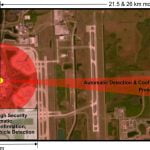 Border Technology
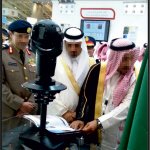 AI Surveillance Camera in Saudi Arabia
 Security RFP
 Gigapixel Cameras or Intelligent Virtual Gigapixel Surveillance?
- See everything in Company Security News
Viseum Safe Cities PSIM

More videos
 Viseum AI camera on TV
 Radar detection 2004
Latest Security News
What happens after you contact Viseum
A specialist reads your project questionnaire for a commercial review and checks it against projects we have already delivered.
We arrange a live demonstration, either online from your own desk or on your site with a Rapid Deployment trailer.