 Viseum AI Surveillance Video Monitoring Software
Why a number plate alone is not enough
A cloned plate copies the plate of a real vehicle of a similar type, so crimes and fines are passed to an innocent owner. False and “ghost” plates are made so that cameras misread them or cannot read them. Plates are hidden, damaged or swapped between vehicles. A plate reader on its own sees a valid plate and lets the vehicle pass.
Vehicle cross check software from Viseum confirms that a vehicle is what its number plate says it is. It compares the make, model and colour seen by the camera with the details registered to the plate, and raises an alarm when they do not match. Viseum Vehicle Cross-Check is for police forces, border agencies, road operators and secure sites that need to catch cloned plates and suspect vehicles.
Three checks on every vehicle
- The plate against your lists: ANPR reads the plate and checks it against watchlists and databases you are authorised to use.
- The vehicle against its registration: make, model and colour recognition checks the shape and colour of the vehicle against the details registered to the plate.
- The vehicle against its own history: earlier sightings of the same vehicle, with where and when it was seen.
When the checks disagree, the system raises an alarm with images of the vehicle and the plate, for an operator to review.
Cloned number plate detection
If the registration says a blue hatchback and the camera sees a silver station wagon, the system flags the mismatch. The operator sees the registered details and the vehicle side by side, and decides. If a plate cannot be read, or reads differently between images, the vehicle is flagged as a possible false or ghost plate. It is then checked by make, model and colour.
Make, model and colour recognition
Viseum Vehicle Cross-Check uses live and recorded camera streams. It recognises the shape and colour of a vehicle and confirms if the colour, make and model match the vehicle registered to the plate. Coverage starts with the makes, models and plate styles chosen for your pilot. It then grows in phases, so the system learns the vehicles and plates that are common in your country.
Finding vehicles with hidden or swapped plates
Where a plate is hidden, dirty or swapped, the system can still search for vehicles of the same make, model and colour across your cameras and show the likely matches. These are leads, not identifications. An operator confirms each one before any action is taken. With Global F3 find, fix and follow software, a confirmed vehicle can then be followed from camera to camera. A Viseum moving camera can zoom in for close-up evidence.
ANPR cross check with the cameras you have
Vehicle Cross-Check works with Viseum iVOS ANPR, part of our traffic management and ANPR Software Technology Services. It reads several entrance and exit lanes at once. It manages watchlists such as VIP, staff, theft and drive-off, sends alarms by email, SMS or voice call, and stores an image of each vehicle with its plate data. Records can be searched by plate, date and time, in or out, area and watchlist, and exported as CSV or XLS files. It can also open and close vehicle barriers.
At gates and borders, the same checks run inside the Viseum Checkpoint under vehicle surveillance system, together with an image of the undercarriage and the driver.
Databases and data protection
Viseum does not hold vehicle registration data. Vehicle Cross-Check connects to the national vehicle databases and watchlists that the customer is lawfully authorised to use. During the pilot, we analyse the software interfaces of those databases and of your other operational systems. Who can see the data, how long it is kept and how access is logged are set to the law of your country.
Typical pilot programme
Vehicle Cross-Check is customised for each country’s vehicles, plates and databases. Typical durations are in working days.
| Stage | Activity | Working days |
|---|---|---|
| 1. Pilot design with initial training | Systems integration pre-planning: identify the operational systems to integrate, and select the pilot’s initial vehicle makes and models and number plate styles | 10 |
| Systems research: analyse the software interfaces of the national vehicle databases and other operational systems for the pilot | 10 | |
| Agree and sign off pilot test success criteria | 5 | |
| Understand the scope of solution deployment, such as identifying suspect vehicles and adding more makes, models and plate styles | 5 | |
| Define pilot system specifications, including locations | 10 | |
| Total for stage 1 | 40 | |
| 2. Pilot deployment | Build pilot and integrate software systems | 60 |
| Install and commission | 10 | |
| Technical and operational training | 5 | |
| Execute pilot | 30 to 60 | |
| Changes and modification of systems, processes and information flow | 20 | |
| Define initial requirements for solution deployment | 5 | |
| Total for stage 2 | 130 to 160 | |
| 3. Solution deployment | Phased plan: more vehicle makes and models, more number plate styles, and integration with other national vehicle databases | As agreed |
Download the Vehicle Cross-Check brochure (PDF) and the iVOS ANPR brochure (PDF).
Frequently asked questions
What is a cloned number plate?
It is a copy of the plate of a real, legally registered vehicle, fitted to a different vehicle. Offences committed in the second vehicle are then traced to the wrong owner.
How does Vehicle Cross-Check catch a cloned plate?
It reads the plate, recognises the make, model and colour of the vehicle, and compares them with the registered details. A mismatch raises an alarm for an operator to check.
Does it work with our existing cameras?
iVOS ANPR works with any camera that supports an RTSP stream, and with analogue cameras through a video encoder. Camera position and image quality affect results, so we assess each site during the pilot.
Can it find a vehicle with no readable plate?
It can search for vehicles of the same make, model and colour and show likely matches. These are leads that an operator must confirm.
Which databases does it check?
Those you are lawfully authorised to use, such as your national vehicle register and your own watchlists. Viseum connects the system to them; it does not supply the data.
How long does a pilot take?
Pilot design takes about 40 working days. Pilot deployment takes 130 to 160 working days, depending on the trial agreed with you.
To see vehicle cross check working on your own roads and cameras, book a private briefing or a demonstration with the Viseum team.
More in Intelligent Video Analytics
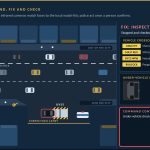
 Under Vehicle Surveillance System (UVSS)
 Vehicle Cross-Check
 AI Video Analytics
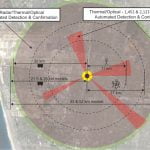 Border Control and Border Security
 Face Recognition Software
- F3: Find, Fix and Follow
 Face Recognition Analytics
 Traffic management software
 Video Management System (VMS)
 Advanced Surveillance Technology
- See everything in Intelligent Video Analytics
Viseum AI camera on TV

What happens after you contact Viseum
A specialist reads your project questionnaire for a commercial review and checks it against projects we have already delivered.
We arrange a live demonstration, either online from your own desk or on your site with a Rapid Deployment trailer.