

International Law Enforcement Agency
This initiative creates low crime levels where police have previously exhausted crime reduction initiatives. Within just 3-4 months of installation, police forces are trained to rely on Viseum Video Analytics Software Technology Services and its unique cameras. Now, Viseum’s 360 Security Cameras are used by international law enforcement agencies to train police forces throughout the world. This includes law enforcement agencies such as the FBI and the CIA.

Read the Metropolitan Police surveillance officer’s report
Global F3 Find, Fix and Follow
One suspect, from a plate read in a city to detention at a border. Each step is found, fixed and followed, and a person confirms before anyone acts.
See Viseum Global F3 Find, Fix and Follow
Read the step-by-step description
A suspect vehicle drives into City A, watched by Viseum 360-degree and fixed cameras, among ordinary traffic. The bar along the top shows the stage: find, fix, follow. The strip along the bottom names where we are (for example City A, Station, Main Street), with the camera or source that has the person and the time; once the view moves in, the inset in the top corner shows the whole city with a gold rectangle for the part in view. Four moments slow down and zoom in: the face captured through the windscreen while the car is held in queuing traffic at a junction, and identified against the watch-list as wanted; the operator confirming the match from the line of look-alikes; the person lost inside a building, every exit watched, and, after changing clothes inside, re-identified on the way out: a card shows the watch-list profile (red jacket) beside what camera 14 sees (grey jacket), and ticks face, build and height, the backpack and the phone data in turn, marks the jacket as changed, and updates the profile; and the switch to a new car, when a drone takes over. Find: the number plate is read on the move; it belongs to a white Nissan Patrol but the car is a black Toyota Camry, so the car is flagged. The crosscheck appears over the bottom right, so the map stays clear. Fix: on foot among people who look alike, the cameras turn to each look-alike in turn and score it as they look (violet circles); the closest scores are listed, and one best match goes to the operator, who confirms it. Follow: each camera hands over to the next with a gold token. Police are told at once, but in a crowded city they follow at a distance and wait for a safe place to stop the suspect, so the cameras keep the suspect in sight for them; the second half shows where that happens. When line of sight is lost, dashed routes run to the cameras the person could reach next; the route to the camera where they reappear turns solid and the others fade. Cameras cannot see through high-rise blocks, only along streets and across open spaces. Each source is shown on the map where its information comes from, and its place on the Global F3 ring lights as it reports: a public post placing them in the area, a database record of past events on this route, a shop's own camera, shared live with the city network under a registered partner programme (as Dubai's Oyoon programme links private-sector cameras) and matched by the suspect's profile, the phone mast whose network data, where lawfully provided, places them inside the building, the vehicle crosscheck of the new car, and the drone. On the right, each source lights as it reports, the match level rises and falls with what is known, the newest finding sits at the top and command control shows which alerts went out. At the end the whole route is drawn in gold and the car, with the drone above it, leaves City A at the edge of the map. The match levels and scores shown are examples. Command control shows how each alert is used: the operator's alarm and the video wall in the control room, the patrol's handheld app (live view, photo and route) and the police radio for the officers on the ground, and the case file, which keeps every image and finding as evidence.
The suspect then drives away. In a slow moment at the city limit, the drone, which flies over City A only, hands the car to the first highway camera with the usual three beats (the drone glows, a gold token passes, the camera glows) and turns back. The same city then pulls out into its place on a simplified map of a real coastline and border, with no real names. Between the highway's cameras the car is unseen, so Global F3 weighs four possibilities, each drawn as a dashed blue route: the car hides in City A, or it heads for City B, the airport or the border crossing. City A's control room watches its parking areas and garages for the hiding case, and the profile, face and plate are sent ahead to the other three. Each possibility is then settled in turn: the plate read at City B rules out hiding in City A; the airport sighting confirms that route; no sighting back in City B rules City B out; and the border crossing is where the suspect is detained. The bars on the right show where the suspect could be, and the clocks show the journey time and the time since they were last seen. Each re-identification is a slow moment: the view slows down and zooms in. On the coastal highway at the edge of City B, a number-plate camera reads the car's plate in moving traffic (the plate is shown masked); staying in City A falls away and the route to City B turns solid. City A's control room then hands the case to City B's: the first glows, a green token travels between them along a green dotted control room link, the second glows, and the label in the corner of the map changes to the control room now in charge. At the airport entrance, where the airport runs live watch-list matching as Gulf airports do, the suspect is re-identified by face and profile against the authorised watch-list and an operator confirms, and police are sent from inside the terminal, but before they reach the entrance the suspect is back in the car and drives away, still followed by the cameras. With no sighting back in City B, the possible routes narrow to the inland road and the case is handed to the border control room. At the checkpoint the face and the plate are matched against the watch-list, an officer confirms, the lane barrier stays closed, and two officers detain the suspect at the booth and lead him away. He never crosses. Because he was heading for the neighbouring country, its police are then told through INTERPOL, in case accomplices or others are waiting for him on their side; nothing is tracked there. Finally the whole journey is drawn, solid gold where a camera saw the suspect and gold dots where it was worked out, with each hand-off marked by a gold diamond, and the panel sums up the sightings, hand-offs and elapsed time. Throughout, the overview in the corner shows where each close-up sits, and the strip along the top names the place. What each source on the Global F3 dial adds: Vehicles reads every plate and finds that this one belongs to another car; Face confirms the person, and an operator checks every match; Social media, checked under lawful authority, places the person on a street from a public post; Knowledge databases (police records) show the route was used before, so the system predicts where they go next; Partner cameras, a shop’s own cameras shared with the police, keep the follow going; Mobile networks, where lawfully provided, confirm the person is inside a building; and Drones follow from above when the person drives away. The match scores, plate digits and journey times shown are examples.
Following one person through standard and Viseum IMC cameras
A Viseum IMC camera picks one person out of a crowd and follows them from camera to camera, beside a fixed standard camera that cannot.
See Viseum Face Recognition Software
Read the step-by-step description
Cameras 1 and 3 are standard cameras with a fixed view: each sees only what is inside its cone, narrow close to the camera and wide across the far sidewalk. Cameras 2 and 4 are Viseum IMC cameras: each sees all round, and zooms in on one person at a time, the narrowed view drawn on the street, following them until a usable face is captured. Everyone who walks into a camera's view is boxed in the street view, appears in that camera's view below, and is profiled straight away in the panel on the right, so the three always agree; when several people are in view the panel cycles through them. Find: camera 1 picks the suspect in the red jacket out of the crowd and builds a profile of clothing, height, build, hair, bag and walk. Between cameras the suspect is out of sight and the profile is held. Faces are captured whenever a camera sees one and are shown as a face-recognition system sees them, not as pictures: 68 landmark points on a face mesh, how far the head is turned, and a quality score. A side view, eyes under a cap or a head looking down is too poor to compare; only a full face is turned into a template and compared with the authorised watch-list, and anyone below the alert level is a no-match whose template is deleted at once, as in UK police live facial recognition. Fix: Viseum IMC camera 2 zooms in on selected people in turn; the suspect's full face scores above the alert level and matches the profile, so the suspect is confirmed, while every other face is a no-match and is deleted. A zoom cannot see eyes under a cap, so that face stays too poor to compare. Standard camera 3 sees only a turned face and re-identifies the suspect by profile. Viseum IMC camera 4 zooms in on the suspect only, to reconfirm the re-tracking by face. Follow: the profile is handed on from camera to camera. The alert level of 0.60 is the default setting of a leading police face-matching system (National Physical Laboratory, 2023); the other scores shown are examples.
A law enforcement agency also reported to Viseum that just 4 Viseum Intelligent Moving Cameras, deployed by 1 police officer, produced more results than over 20 of any other PTZ Camera. Each of these competing cameras would need more time and many police officers to use, but would deliver fewer results. The following case studies are described by this 1 police officer. This police officer deals primarily with detecting crime, assisting front-line officers, organising operations and advising on strategy, all with the use of surveillance:
Initial Safe City Deployment
“I was organising operations involving serious offences for a wide variety of issues. Just 4 redeployable Viseum cameras have been located in one of the highest crime areas within our capital city. These cameras are in constant use. They are able to move by themselves and monitor suspects so that faces can be clearly identified. Viseum’s technical support team trained us to easily mask out unnecessary parts of the picture. The cameras’ evidence is easily viewed on a laptop or mobile phone. The evidence obtained is of immense value during the case-building process. Viseum records for a very long time, allowing downloads to be accessed easily. This enables other investigations to take place while Viseum cameras are left working on their own.”
Safe City Project 1: Only 1 Viseum camera taking 3 weeks
“I was in possession of intelligence that a group of drug dealers was at a location. I requested the Viseum IMC Equipment, necessary to conduct surveillance on this group. This was the initial installation to see just how effective these cameras are.”
“The playback facility was easy to navigate and use. I collected information relating to the suspects. This vital information led to arrests during a drug deal, which resulted in the suspects being convicted. From this operation, there have been no sightings of the gang members or their associates within the area.”
Safe City Project 2: Only 3 Viseum cameras taking 4 weeks
 “The next project I was tasked to deal with involved a suspect who was sexually assaulting females on a public common. My problem was there were no lampposts with power adapters for the Redeployable Cameras. The Viseum cameras gave us the solution. I put the cameras outside the common to focus on many areas leading into and away from the area. Each camera’s wide contextual view covered the wide area. The cameras’ automated PTZ meant that I had complete close-up coverage.”
“I was able to capitalise on this project by using 3 Viseum cameras. I was able to view all areas in and around the common. Each camera was able to zoom into the common as well as the adjacent roads. With this coverage, I was confident in a successful result. In a short time, a suspect was arrested and charged. Viseum proved again to collect vital evidence as well as follow suspects in real-time.”
“Viseum’s evidence was also used to identify a vehicle used by a gang stealing motorcycles. Having been identified by Viseum, this vehicle was found abandoned. It was examined for intel on the gang prior to crushing it. None of this information or evidence could have been achieved without the Viseum camera.”
Safe City Project 3: Only 2 Viseum cameras taking 4 weeks
“This involved the arrest of a suspect who was known as the ‘slit throat robber’. Also, the suspect was committing these crimes in an area that surveillance could not reach. I immediately requested that the Viseum units be deployed. I was able to cover the area with ease. With the capabilities of Viseum cameras, I collected information immediately on the pedestrian traffic. Within days, I had collected information on known suspects. This allowed me to use them for questioning. The perpetrator was eventually arrested after a victim identified him from images collected by Viseum’s camera.”
Latest Law Enforcement Project
“I was collecting evidence on several suspects who have targeted a well-known off-licence. Upon reading crime reports and visiting the site, I understood how the suspects get away with not being caught. The site has four side roads and a petrol station that all offer cover. The only way I could maximise evidence collection with minimal equipment was to endorse the use of Viseum. The Viseum cameras were set up and began collecting information immediately. When the first camera was being installed, a suspect had walked the entire area. His movements were immediately noticed by the Viseum camera and he was followed automatically.”
Viseum Safe City Support
“The Viseum support team has proven throughout that they are willing and able to deal with any technical requests. The team offers support when others do not have support. Their vision in wanting to improve an already great product and service is astonishing. Their support team has often asked us how the system could be improved for users. I am equally impressed that Viseum not only listens to comments, but they take our suggestions and implement them.”

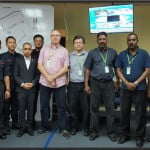
Viseum and Royal Malaysia Police visit this London Surveillance Control Room
Conclusion
 “The Viseum camera has the ability to offer a complete package in surveillance. We have not come across anything within law enforcement that is better. In traditional installations, we would use 6 cameras to cover an area. We can now use just one Viseum unit. The ability to mask out buildings and other borders is vital to having exactly the right view on playback. The evidence gathered by the Viseum cameras has also enabled us to collect intel on antisocial behaviour throughout all projects, which we are now collating to find patterns leading to more serious offences, as it inevitably does.”
“I constantly deal with enormous amounts of video evidence throughout my career. Having now used the Viseum cameras in various projects, I can ensure quality and reliability. I can honestly say, it does what it says on the tin. I will use the Viseum System whenever faced with a situation where surveillance is needed. During each deployment, I now actively look for future projects to carry on benefiting from these cameras.”
“I have had first-hand experience of law enforcement during security deployment after 9/11 and 7/7. Having Viseum at that time would certainly have helped. My support is with Viseum for its effectiveness in service. This is an endorsement for the use of Viseum cameras. I am happy to recommend them to other law enforcement agencies. They too can take advantage of this essential deterrent.” (London Police Surveillance Officer)
Improving Law Enforcement and saving budgets
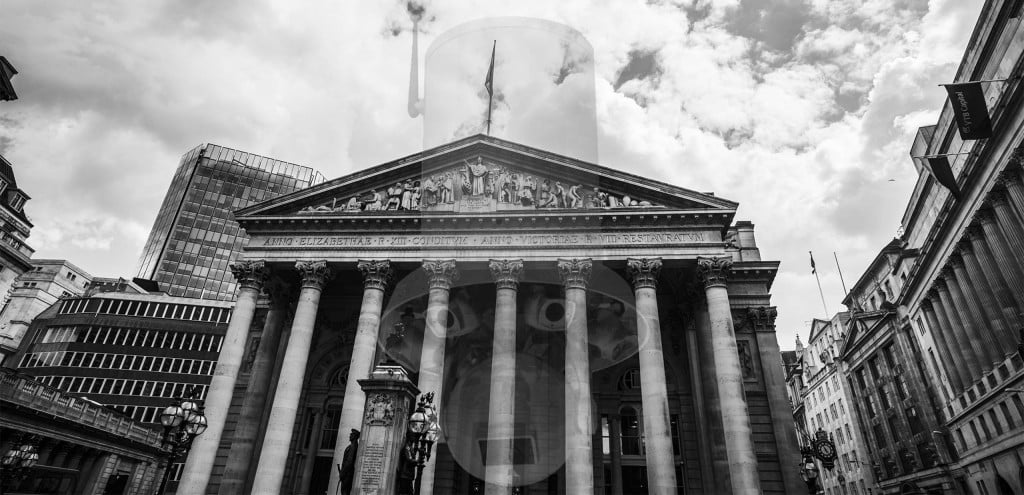
 This council surveillance savings calculator works out the yearly saving when AI situational awareness replaces extra cameras and operators.
Learn More »
 This police surveillance savings calculator sizes the yearly operational saving when AI situational awareness replaces extra cameras and operators.
Learn More »

This narrated presentation shows one of Viseum’s most popular Product Solutions for temporary surveillance and semi-permanent surveillance.

This narrated presentation shows Viseum’s Rapid Deployment Surveillance Trailer. Fully operational within moments of arrival for immediate wide-area coverage.

This narrated example shows how the correct situational awareness can automatically avoid the most mundane and the most complex security risks.
More in Case Studies
 Safe Cities
 Police Law Enforcement
 Safe City Performance
 Safe City Report
 British made surveillance cameras
 Riot Police Tactics
 Community Video Surveillance
 Government Security
 City Regeneration Video Surveillance
 Event video surveillance and Security
 Community Regeneration
 CCTV User Group
- See everything in Case Studies
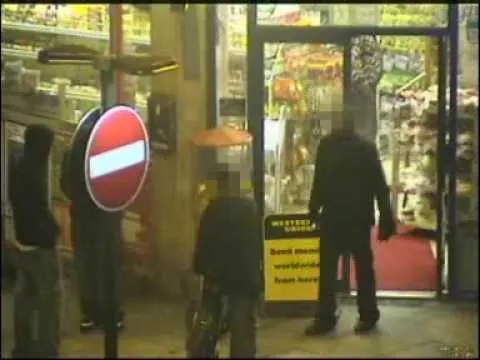
Drug Deal Auto Surveillance 2006
More videos
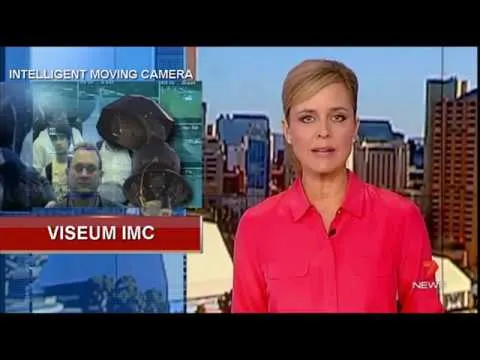 Viseum AI camera on TV
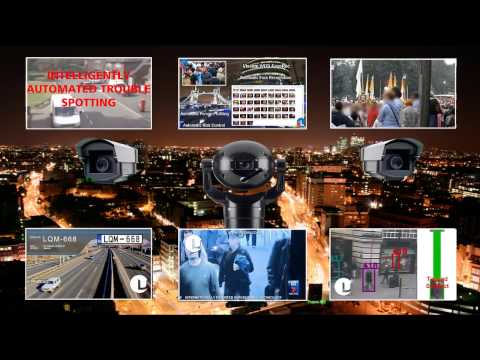 Intelligent Moving Camera PSIM
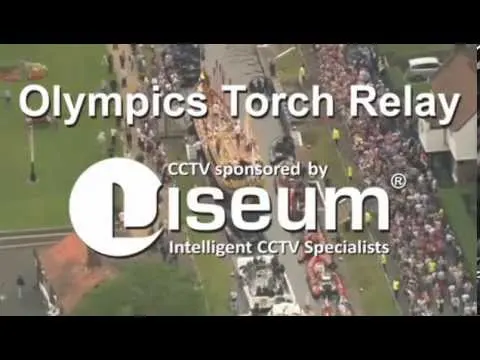 Olympic Security
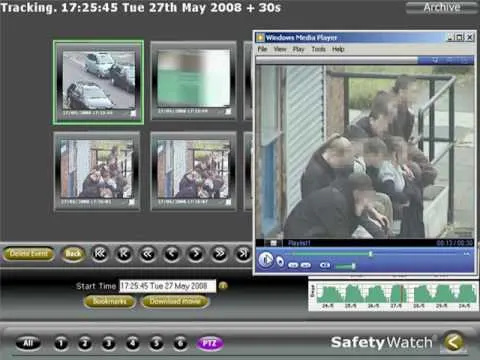 AI Video Analytics 2004
What happens after you contact Viseum
A specialist reads your project questionnaire for a commercial review and checks it against projects we have already delivered.
We arrange a live demonstration, either online from your own desk or on your site with a Rapid Deployment trailer.